
It’s strange how something so essential can become so invisible.
Water flows through our homes quietly—out of taps, through showers, into kettles and washing machines—without demanding much thought. We trust it. We use it. And most of the time, we don’t question it.
Until we do.
Maybe it’s the taste that feels slightly off one morning. Or the chalky marks left behind on your dishes. Sometimes it’s just a feeling—you can’t quite explain it, but something doesn’t seem right.
That’s usually where awareness begins.
When “Good Enough” Starts to Feel… Not Quite Enough
Most municipal water systems are designed to meet safety standards, and that’s important. But “safe” doesn’t always mean optimal.
There can still be chlorine, minerals, sediments, and other trace elements that affect how water tastes, smells, or behaves.
You might not notice it immediately. In fact, many people don’t for years.
But once you do notice, it tends to stick with you.
You start paying attention to small details—how your tea tastes, how your skin feels after a shower, how often you need to clean buildup from appliances.
And slowly, you begin to wonder if there’s a better way.
Looking at the Whole Picture
A common mistake is thinking about water quality only in terms of drinking.
But water is part of nearly everything we do at home. It’s not just what we consume—it’s what we bathe in, clean with, and rely on for everyday routines.
That’s why home water purification systems have become more relevant in recent years.
They take a broader approach, treating water as it enters your home rather than focusing on a single tap.
It’s not about fixing one issue—it’s about improving the overall experience.
And for many households, that shift changes how water feels in a very real way.
The Simplicity of Starting Small
Of course, not everyone is ready to install a full system. And that’s completely fine.
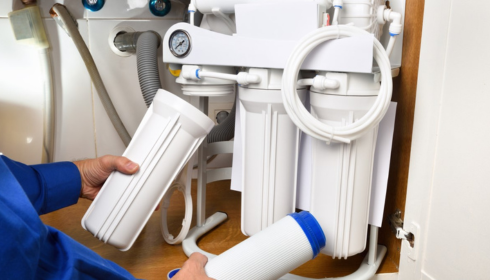
Sometimes, it starts with something simpler—a single water purifier system in the kitchen.
This kind of setup focuses specifically on drinking water. It removes impurities, improves taste, and gives you a sense of control over what you’re consuming.
It’s a small change, but often one that’s immediately noticeable.
And interestingly, it tends to lead to more questions.
If drinking water can be improved this much, what about everything else?
Understanding What Your Water Actually Needs
Here’s the part that often gets overlooked: not all water issues are the same.
What works for one home might not make sense for another.
That’s where understanding your water becomes important.
You don’t need to be an expert. Just pay attention.
Does your water leave residue?
Does it have a noticeable taste or smell?
Are your pipes or appliances showing signs of buildup?
These small clues can point you in the right direction.
Because choosing the right water treatment solutions isn’t about following trends—it’s about addressing your specific situation.
The Quiet Impact on Daily Life
What’s fascinating about improving water quality is how subtle the benefits can be.
You might not wake up one day and think, “Everything has changed.”
Instead, it shows up in small ways.
Your coffee tastes cleaner. Your laundry feels softer. Your skin doesn’t feel as dry after a shower.
Individually, these things might seem minor.
But together, they create a noticeable difference in how your home feels.
And that’s often what people are really after—not perfection, but improvement.
It’s Not About Overcomplicating Things
There’s a tendency to overthink water solutions.
People assume they need the most advanced system, the most comprehensive setup.
But that’s not always true.
Sometimes, the right solution is the one that fits your needs without adding unnecessary complexity.
A simple purifier. A targeted filter. Or, in some cases, a whole-home system.
The key is balance.
Finding something that improves your water without making your life more complicated.
The Shift from Habit to Awareness
For most of us, water is just part of the background.
We turn on the tap without thinking. We assume it’s fine because it always has been.
But once you start paying attention, that habit shifts into awareness.
You notice things you didn’t before. You ask questions. You become more intentional about something that used to feel automatic.
And that awareness often leads to better choices—not rushed decisions, but thoughtful ones.
A Thought to Sit With
If you’ve ever paused, even briefly, to question your water, it’s probably not random.
It’s a small signal.
Not a warning. Not a problem. Just an invitation to look a little closer.
You don’t need to act immediately. You don’t need to overhaul your entire system.
But understanding your water—what’s in it, how it affects your home—is a good place to start.
Because in the end, water isn’t just something you use.
It’s something you live with.
And sometimes, giving it a bit more attention can make everyday life feel just a little better.