
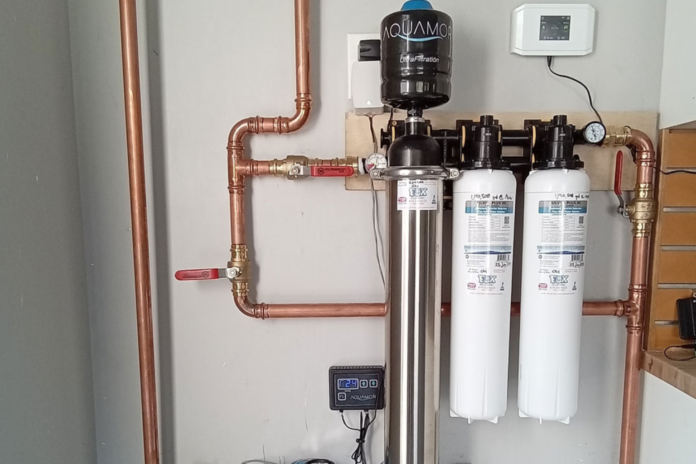
The Day You Notice Something Isn’t Quite Right
It usually doesn’t happen all at once. Maybe you’re washing dishes and notice a cloudy film left behind, even after rinsing thoroughly. Or you step out of the shower and your skin feels strangely tight and dry. Some people first catch on when they see white, chalky deposits forming around faucets.
These small clues tend to point to a bigger reality — water isn’t always as simple as it looks.
Most municipal supplies are safe, yes. But “safe” doesn’t necessarily mean ideal for everyday living. Minerals, chemicals, and particles often travel along with the water we use daily, and over time, their presence becomes noticeable in subtle but frustrating ways.
That’s when many homeowners begin to wonder what’s actually happening inside their plumbing.
When Minerals Start Leaving Their Mark
One of the most common issues affecting households is related to hard water problems.
Hard water contains elevated levels of minerals, mainly calcium and magnesium. These minerals aren’t harmful to health, but they can create a variety of practical challenges around the home.
Over time, they form scale deposits inside pipes, reducing water flow and increasing maintenance needs. Appliances like water heaters, washing machines, and coffee makers often wear out faster because of mineral buildup.
The effects also extend to everyday routines. Soap may struggle to lather properly, laundry can feel stiff, and hair may appear dull or harder to manage.
What’s interesting is that many people live with hard water for years before realizing how much it affects their daily comfort.
The Hidden Impact of Disinfection Chemicals
While minerals cause visible issues, chemicals used in water treatment can create a different set of concerns.
Municipal water systems often rely on chlorine to eliminate harmful bacteria and ensure safe distribution. While this process is essential for public health, it can leave behind a distinct smell and taste.
That’s why chlorine removal has become a priority for many households seeking better water quality.
Reducing chlorine levels can significantly improve the flavor of drinking water and eliminate the chemical odor that sometimes lingers in kitchens and bathrooms.
Many homeowners also report that chlorine-free water feels gentler on skin and hair, reducing dryness and irritation.
It’s one of those improvements that people often don’t realize they need — until they experience the difference.
When Tiny Particles Make a Big Difference
Beyond minerals and chemicals, water can also carry microscopic particles that affect clarity and cleanliness.
These particles may include sand, rust, or organic debris introduced through aging infrastructure or natural environmental conditions.
This is where sediment reduction becomes essential.
Removing these particles not only improves water clarity but also protects plumbing systems and appliances from damage. Sediment buildup can clog pipes, reduce water pressure, and increase maintenance requirements over time.
Filtration designed to address sediment ensures that water flows smoothly and consistently throughout the home.
The Everyday Benefits of Cleaner Water
Improving water quality offers benefits that extend far beyond what’s immediately visible.
Appliances operate more efficiently when free from mineral scale. Laundry becomes softer and easier to clean. Dishes dry without stubborn spots or residue.
Personal comfort improves as well. Many people notice smoother skin, shinier hair, and less irritation after switching to treated water.
These changes may seem small individually, but together they create a noticeable improvement in everyday life.
Choosing the Right Approach to Water Treatment
Selecting a water treatment solution depends largely on local water conditions.
Testing water quality is often the first step. This process identifies whether issues involve hardness, chemical content, sediment levels, or a combination of factors.
From there, homeowners can explore options such as filtration systems, softeners, or multi-stage treatment units tailored to specific needs.
Professional consultation can also help ensure that chosen solutions match both household requirements and long-term maintenance capabilities.
The Importance of Consistent Maintenance
Even the best water treatment systems require ongoing care to maintain effectiveness.
Filters must be replaced regularly, and equipment should be inspected periodically to ensure optimal performance.
Neglecting maintenance can reduce treatment efficiency and allow issues to return over time.
Fortunately, modern systems often include monitoring features that simplify maintenance schedules and alert homeowners when service is needed.
Proper upkeep helps ensure consistent water quality year after year.
Looking Toward the Future of Water Quality Solutions
Advancements in water treatment technology continue to improve both performance and convenience.
New filtration systems are becoming more compact, energy-efficient, and environmentally friendly. Smart monitoring features allow homeowners to track system performance in real time.
There’s also growing interest in sustainable solutions that reduce water waste while maintaining high treatment standards.
These developments promise to make cleaner, safer water more accessible for households worldwide.
A Simple Upgrade That Changes Daily Living
Water is something we rely on constantly, yet many people don’t consider its quality until problems become noticeable.
Addressing issues like mineral buildup, chemical taste, and sediment particles can transform everyday experiences — from cooking and cleaning to personal care.
In the end, improving water quality isn’t just about technology or filtration systems. It’s about comfort, efficiency, and peace of mind.