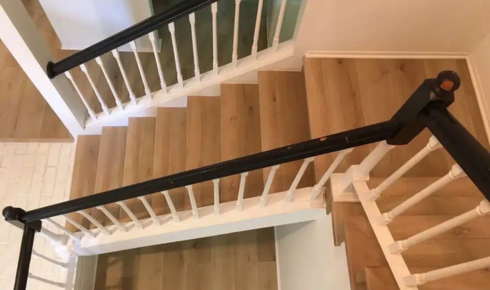
Staircases work harder than almost any other flooring surface in a home or commercial property. Every step concentrates weight, friction, dirt, and impact into a relatively small area. Unlike a quiet corner of a bedroom, stairs deal with constant movement, sharp edges, and changing foot pressure throughout the day.
That is why staircase flooring should never be treated as a simple extension of the hallway. Professional installation improves safety, protects the stair structure, creates a cleaner finish, and helps the material perform properly for years. A staircase may look straightforward, but each tread, riser, nosing, and transition must be measured and fitted with precision.
Staircases Require More Precision Than Flat Floors
Installing flooring across an open room allows for small adjustments along walls, where trim can often conceal minor gaps. Stairs are far less forgiving. Every tread remains visible, every edge must align, and even a slight variation can make the finished staircase look uneven.
An experienced flooring installer measures each step individually because stair dimensions are rarely identical. Older homes may have settled over time, while newer staircases can still contain small framing inconsistencies. Assuming every tread is the same size is a reliable way to create unnecessary gaps, loose edges, or awkward cuts.
Professional installation accounts for these differences before the flooring is cut. This reduces material waste and creates consistent spacing from the bottom step to the landing. It also ensures that stair nosings sit correctly instead of projecting too far or ending short of the tread.
Proper Installation Helps Prevent Premature Wear
Stair flooring usually shows wear faster than flooring in surrounding rooms. Foot traffic repeatedly lands in the same central area of each tread, while the front edge experiences continuous pressure as people climb and descend.
When materials are poorly fitted, movement can develop beneath the surface. A loose plank, lifting edge, or poorly secured nosing will continue to worsen under repeated use. What begins as a small click or slight gap can eventually become visible damage or a safety concern.
Professional installers select the correct adhesive, fasteners, underlayment, and preparation method for the flooring product and stair construction. Hardwood, luxury vinyl, laminate, and carpet each require different installation techniques. Using the same approach for every material is a little like using one tool for an entire renovation. It may technically fit in your hand, but that does not make it the right choice.
Stair Nosing Plays a Major Role in Safety
The stair nosing is the finished edge at the front of each tread. It may seem like a decorative detail, but it also protects the flooring edge and helps define where each step begins.
A properly installed nosing should feel secure underfoot and align evenly across the staircase. Loose, raised, or uneven nosings can create trip hazards, especially in busy homes, offices, retail spaces, and rental properties. The wrong profile may also interfere with the natural movement of the foot when stepping down.
Professional installers match the nosing to the flooring material, stair dimensions, and installation system. Some products use flush stair noses, while others require overlapping profiles. The correct choice depends on both appearance and performance. A well-fitted edge also prevents exposed flooring layers from chipping or separating over time.
Material Selection Should Match Real Use
The best staircase flooring is not always the material that looks most impressive in a sample display. It should match the amount of traffic, the type of property, maintenance expectations, and the condition of the existing stairs.
Solid hardwood offers a durable, refined finish and can often be refinished in the future. Engineered wood provides a similar appearance with greater dimensional stability in certain environments. Luxury vinyl can be practical for busy households and commercial spaces because it resists moisture and is relatively easy to maintain. Carpet adds softness, warmth, and sound control, although it requires careful stretching and edge finishing.
A professional installer can identify whether the selected material is suitable for stair use. Not every plank product has a compatible stair component, and not every surface provides the desired level of grip. Planning these details before purchasing helps avoid costly substitutions once work has already started.
For homeowners and property managers comparing options, professionalStaircase Flooring services can help ensure the chosen material, stair profile, and installation method work together properly.
A Finished Staircase Improves the Entire Interior
A staircase often connects several visible areas of a property. It may sit beside the entryway, open into a living room, or lead directly into an upper hallway. Because of this, an outdated or poorly finished staircase can affect the appearance of more than one space.
New flooring creates visual continuity between levels. Matching stair treads to nearby hardwood or luxury vinyl can make the layout feel more intentional. Contrasting risers, coordinated nosings, and clean transitions can also give the staircase a custom-built appearance without changing the entire structure.
The key is consistency. Grain direction, plank placement, edge alignment, and color variation should be planned before installation begins. Random cuts or mismatched tones become especially noticeable on stairs because the eye naturally follows the repeating pattern upward.
Professional Work Reduces Future Repair Costs
Low-cost staircase installation can become expensive when sections need to be repaired or replaced prematurely. Removing damaged stair flooring is often more complicated than replacing a plank in the middle of a room. Adhesive residue, broken nosings, and damaged tread surfaces may require additional preparation before new material can be installed.
Professional work focuses on long-term stability from the beginning. Proper surface preparation, accurate fitting, secure attachment, and compatible materials reduce the likelihood of movement and separation.
This is particularly valuable in commercial properties, rental buildings, and active households where the stairs cannot remain out of service for repeated repairs. A durable installation also helps protect the underlying staircase from moisture, impact, and daily wear.
Invest in a Staircase Built for Daily Life
Professional staircase flooring adds value through more than appearance. It improves stability underfoot, protects exposed edges, supports consistent wear, and creates a polished connection between different levels of the property.
The strongest results begin with accurate measurements, suitable materials, proper stair components, and installation methods designed for concentrated traffic. Cutting corners on stairs usually makes those corners more visible.
Homeowners and business owners planning a flooring upgrade should include the staircase in the project from the beginning rather than treating it as an afterthought. Speak with an experienced flooring installer to evaluate the existing steps, compare suitable materials, and create a staircase that looks refined, feels secure, and continues performing well for years.