An underground boiler pipe carries heated water between an outdoor boiler and the building or heating system it serves. Choosing the right pipe, providing proper insulation, and installing it correctly can help reduce heat loss and support reliable heating performance.
What Is an Underground Boiler Pipe?
An underground boiler pipe is part of a hydronic heating system that connects a boiler located outside with equipment inside a home, workshop, barn, or other building. Instead of running the supply and return lines above ground, the pipes are placed inside a trench and covered with soil.
This setup is particularly useful when an outdoor boiler is located some distance from the building that needs heat. Keeping the piping underground can create a cleaner installation while protecting the lines from everyday outdoor exposure.
An underground system normally uses two lines. One carries heated water from the boiler toward the building, while the other returns cooler water to the boiler so it can be heated again.
Why Proper Underground Boiler Pipe Matters
The distance between an outdoor boiler and the building can have a significant effect on how much heat is lost before the water reaches its destination.
Heat naturally moves from a warmer area toward a cooler one. Because underground piping is surrounded by soil, an improperly insulated pipe can transfer heat into the surrounding ground rather than delivering that heat where it is needed.
The U.S. Department of Energy notes that insulating hot water piping can reduce heat loss from the piping system. Its Building America guidance also explains that insulation is important for limiting unwanted heat transfer through hot water pipes.
For this reason, underground boiler pipes should not simply be treated as ordinary water pipes. The pipe and its insulation need to be selected as part of the overall heating system.
Types of Pipe Used Underground
Several types of piping may be suitable for underground heating applications, depending on the boiler, operating temperatures, distance, flow requirements, and local installation requirements.
Flexible PEX-based piping is commonly considered for underground hydronic applications because it can be supplied in long lengths. Fewer connections along the underground run can simplify installation and reduce the number of potential connection points.
Another option is rigid piping with a dedicated insulation system. This can provide a durable installation, although rigid systems may require more planning because the pipe cannot bend as easily around obstacles.
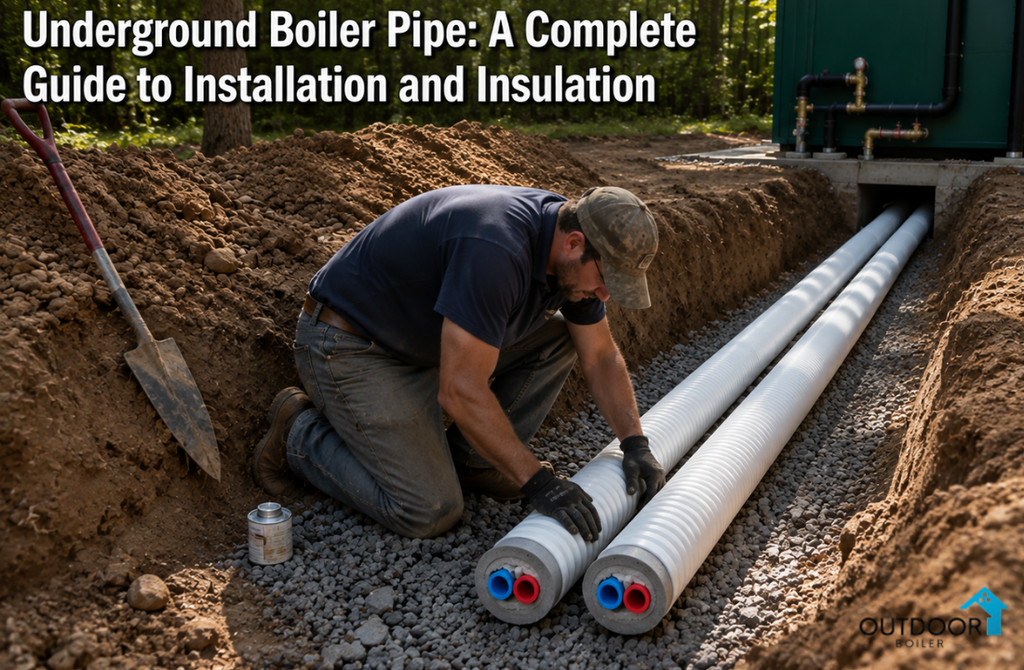
Pre-insulated underground piping is another approach. These systems typically place the carrier pipes inside an insulated outer casing. Some designs use separate supply and return lines within the same protective assembly.
The important point is that the pipe should be rated for the temperatures, pressures, and conditions expected in the heating system. Always follow the pipe manufacturer’s specifications rather than selecting material based only on size or appearance.
The Importance of Insulation
Insulation is one of the most important parts of an underground boiler pipe installation.
The goal is simple: keep the heat inside the water for as long as possible. Without sufficient insulation, heat can escape from the supply line before it reaches the building.
The U.S. Department of Energy explains that insulation reduces heat loss and that insulation performance depends on factors such as thermal resistance, installation quality, and protection from moisture.
Underground insulation also needs protection from the surrounding environment. Moisture can affect some insulation materials and reduce their effectiveness. For this reason, an underground piping assembly should be designed with both thermal performance and moisture protection in mind.
It is also important to pay attention to fittings and connection areas. Insulating only the straight sections while leaving elbows, valves, or other components poorly protected can create areas where heat is lost more quickly.
Planning the Trench
Before digging, carefully plan the route between the boiler and the building.
A shorter and more direct route can reduce the amount of piping required and may make installation easier. However, the shortest route is not always the best route. Existing utilities, drainage, landscaping, structures, and future construction should all be considered.
Always identify underground utilities before excavation. Local requirements may also specify trench depth, separation from utilities, protective measures, or other installation details.
The pipe should be installed in a way that protects it from unnecessary physical stress. Sharp objects, unstable soil, excessive bending, or improper backfilling can potentially damage the piping or its protective layers.
Supply and Return Lines
A boiler heating system generally needs both a supply line and a return line.
The supply line transports heated water from the boiler to the building. After the heat is transferred into the heating system, the return line carries the cooler water back toward the boiler.
Keeping these lines properly insulated helps maintain the temperature difference needed for effective heat transfer.
The size of the underground boiler pipe also matters. A pipe that is too small may restrict flow and increase resistance, while an unnecessarily large pipe can increase material and installation costs. Proper sizing should be based on the required flow rate, system design, pipe length, and boiler specifications.
Common Underground Boiler Pipe Problems
Poor planning or installation can lead to several problems.
One common issue is excessive heat loss. This can happen when the insulation is inadequate, damaged, compressed, or exposed to moisture.
Leaks are another concern, particularly at underground connections. Because buried piping is difficult to inspect, minimizing unnecessary underground joints can make future troubleshooting easier.
Physical damage can also occur if the pipe is installed without adequate protection. Soil movement, excavation work, rocks, or other external forces may affect the piping over time.
Another potential issue is incorrect sizing. Even when the pipe itself is installed correctly, an improperly sized system can affect circulation and overall heating performance.
How to Get Better Performance From an Underground Boiler Pipe System
Good performance starts with proper system design.
Choose piping that is appropriate for the boiler’s operating conditions. Use insulation designed for the application and install it according to the manufacturer’s instructions. Plan the trench carefully and protect the piping from physical damage.
It is also important to consider the entire heating system rather than focusing only on the buried pipe. Pump sizing, flow requirements, boiler output, heat exchanger configuration, and indoor distribution piping can all affect how effectively heat reaches the building.
For more information about insulation and energy efficiency, the U.S. Department of Energy provides useful guidance through its Building Science Education resources.
Final Thoughts
An underground boiler pipe may seem like a simple part of an outdoor heating system, but its design and installation can have a major impact on heat delivery. Proper pipe selection, insulation, trench planning, and system sizing can help minimize heat loss and support dependable performance for years to come.
If you are planning an underground boiler installation or replacing an existing piping system, take the time to evaluate the entire setup before digging. Contact us or visit our website at outdoorboiler.com to learn more about underground boiler piping solutions and find the information you need to plan your heating project with confidence.